- HORMONAL THERAPY
- SURGICAL PROCEDURES AND MICROSURGERY
- ARTIFICIAL INSEMINATION
- OTHER TREATMENT FOR MALE INFERTILITY
- ASSISTED REPRODUCTIVE TECHNOLOGIES
- CONCLUSION
 Hormonal Therapy Hormonal Therapy |
| |
In many cases infertility is caused by hormonal imbalances that affect ovulation in women and or sperm development in men. Hormonal therapy is used to replace or enhance the hormonal stimulation necessary for a couple to successfully conceive.
Follicular development and ovulation in women and sperm development in men are all functions controlled primarily by two hormones discussed earlier; FSH and LH. Together, they stimulate egg develovpment ovulation in women and sperm production in men. The body must produce these hormones in the proper sequence, in the right amounts, at precisely the right times for ovulation and proper sperm production to occur.
When there is not enough of either hormone or if they are not released at the right time, the process is impaired and the chances for conception are drastically reduced. However, medications are used with great success to supplement or replace these hormones and to induce ovulation or sperm development or replace these hormones and to induce ovulation or sperm development.
|
| Surgical procedures and Microsurgery |
| |
Sometimes, the cause of infertility can be traced to past infections or inflammations that left scarring or adhesions.
This condition can often be surgically corrected to improve fertilty. Endometriosis, fibroids and other uterine or tubal problems can also be treated with surgical techniques.
In many cases, surgery may be all that is neeeded to restore a couple's fertility. However, these procedures are frequently part of a more comprehensive approach and may be utilised in conjunction with other therapies. |
| Artificial Insemination |
 |
Using Husband's sperm |
| Artificial insemination is usually used to treat subfertile men with fertile female partners. Couples with infertility due to a male problem such as low seminal volume, low sperm concentration or decreased motility, may respond well to artificial insemination. Artificial insemination is also commonly used to treat infertility caused by cervical mucus problems or immunologic factors in the woman. It is a relatively simple and painless procedure. The male is asked to produce a semen sample by masturbation. The laboratory staff prepares the sample and then use the sample to inseminate the female partner. |
| |
|
|
Donor Insemination |
| Inseminations may also be performed with donor sperm. Before insemination with donor sperm, the sperms are carefully tested, frozen for atleast 6 months and then stored to enable screening and prevention of communicable diseases. |
|
| |
|
Therapeutic insemnation with donor sperm is used in the cases of : |
| - |
Low or no sperm count |
| - |
Ejaculation problems |
| - |
Poor sperm penetration assay results |
| - |
Immunologic infertility |
| - |
Genetic incompatibility |
|
| |
|
Collecting the specimen |
|
Sperms are usually collected through masturbation, specially processed and washed and inserted into the woman's vagina, cervical canal or directlry into her uterus. Placing sperm directlly into the cervical canal increases the number of sperms that may move through the reproductive tract. Under normal conditions, less that 10 % of all sperm deposited naturally into the vagina reach the cervix. If the woman has poor or absent cervical mucus, the doctor may insert the sperm directly into the uterine cavity, thus increasing the chances of fertilization.
Great care must be taken in collection of the sperm specimen to be used for insemination purposes. The man must be willing to produce a semen specimen usually at the clinic. The couple will probably be asked to refrain from intercourse for 48-72 hours ( but no longer than 5 days ) before sperm collection , to ensure possible specimen.
If the man is unable to produce a sperm sample in the clinic he may have sexual intercourse at home using a special condom provided by the doctor. However, the sperm of some men cannot survive the transport form home to the clinic, because the sperm do not stay active long enough to allow this. Any questions or concerns about this should be discussed with your doctor. |
| Other treatment for Male Infertility |
| |
|
Medical |
| |
|
| - |
Treatine unexplained oligoasthenospermia with hormones. |
| |
|
| - |
Treating infections |
| |
|
| - |
Treatment of antisperm antibodies |
| |
|
|
Surgical |
| |
|
| - |
Varicocele repair |
| |
|
| - |
Vasovasostomy |
| |
|
| - |
Epididymovasostomy |
|
| Assisted Reproductive Technologies ( ART ) |
| |
There are several procedures designed to unite sperm and eggs, thus bypassing altogether some of the factors causing infertility. Collectively, these procedures are referred to as assisted reproductive technologies. Although, most couples do not require these procedures to conceive, ART provides hope for those who do not respond to other therapies. ART procedure involves the use of various hormones to stimulate the growth of as many oocytes as possible. This multiple oocyte developemt increases the chances for fertilization, and subsequently, pregnancy.
The most common ART procedures include : |
|
In vitro fertilization |
|
Gamete intrafallopian transfer (GIFT) |
|
| |
|
Gamete Intarafallopian Transfer ( GIFT ) |
|
Gamete intrafallopian transfer (GIFT) developed in 1984 is another ART procedure used to assist infertile couples. A mixture of sperm and eggs is placed directly into one of the woman's fallopian tubes during a laparoscopy. Conception can occur in the fallopian tube. Once fertilized, the embryo then travels into the uterus, just as in a natural cycle. As with other ART procedures, GIFT requires that the woman's ovaries first be stimulated with hormonal medication to encourage the developement of multilple oocytes. This enhances the possibility of fertilization. With GIFT, fertilization takes place inside the woman's body. |
| |
|
Advances in ART Therapy |
|
| |
| These are several procedures associated ART techniques : |
|
Pituitary Down regulation |
|
Cryopreservation |
|
Micromanipulation |
|
| |
|
Pituitary Down Regulation |
|
When discussing ART therapies with the doctor , the couple may hear the term down regulation. This is achieved using induced medication and shuts down pituitary gland. A down regulated pituitary gland minimises the chance of a premature LH surge. Such a surge usually results in a cancelled ART cycle because the eggs necessary to continue the procedure cannot be retrieved. |
| |
|
Cryopreservation |
|
Many ART centres now have the ability to preserve embryos not used in a particular ART cycle, for future use. Once the embryos are frozen and stored, they remain viable for long periods of time. Not all frozen embryos will survive thawing.
Cryopreservattion enables some embryos to be used in the ART cycle and some to be stored for future use in a natural cycle ( a cycle without hormonal stimulation). Cryopreservation may also lower the cost of subsequent ART procedures because the first few stages ( ovarian stimulation, egg retrieval) do not have to be repeated when the frozen embryos are used. |
| |
|
Micromanipulation |
|
In men with radicallly reduced sperm numbers or immotile and abnormal sperm, the sucess of IVF has been limited. When sperm quality is severely compromised, microsurgical interventions such as gamete micromanipulation, may be used. This procedure involves IVF combined with a microscopic procedure direcred at increasing the chance of fertilization. It is especially effective for men with very low sperm count or in couples who have not found successs with routine IVF.
Many laboratories aroudndt the world are doing considerable research to new approaches in micromanipulation. |
| Two of the more promising include : |
| • |
Intracytoplasmic sperm injection (ICSI) |
| • |
Assisted hatching |
|
| |
|
Intracytoplasmic Sperm injection ( ICSI ) |
|
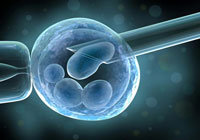
ICSI is a micromanipulation procedure whereby a single sperm is injected into the egg. This technique may provide men who have very low amounts of weak sperms ( too low for routine IVF )a chance to fertilize individual eggs. If the egg is fertilized, the embryo is inserted into the uterus. |
| |
|
ART : Summary |
|
The success rate of ART technologies has improved steadily since they were introduced in the late 1970s. I n most of these cases, success may require more than one attempt before conception occurs, however, this is true of even normally fertile couples who have only 11% chance of pregnancy within any given month. With the use of ART procedures, infertile couples have a chance of achieving pregnancy that compares favourably with that of a fertile couple. |
| Conclusion |
| |
There is hope for every infertile couple!!! Every year, thousands of couples become parents using the procedures and the medications described in this booklet. If a specific problem is causing infertility, the sooner it is identified, the sooner you can begin treatment to bring you and your partner closer to achieving your goal. Do not delay seeking professional help!
Medical or surgical treatment is available for many of the factors that can cause infertility, and success varies considerably depending on the underlying problem. Overall, the treatment for infertility is quite promising about 65% of all couples treated for infertility will eventually be successful in having a baby.
For some couples, family building goals can be achieved through adoption or foster parenting. Others can choose to be child- free and pursue different outlets for their emotional nurturing energies.
What seems to be most helpful to all couples is successfully working through the difficult and consuming feeling of the infertility experience to the point of acceptance and resolution. By doing so, together you and your partner may discover a new level of understanding and a strengthened relationship. |
|

 INFERTILITY TREATMENT